Best Custom Bed Sheet Set & Duvet covers China Manufacturer

Whether you prefer crisp cotton, silky sateen, or cozy linen, our sets ensure a restful and refreshing sleep experience.

  • Flexible matching
  • Chose the suitable fabric
  • Free Design
  • Environmental Protection and Health
1 Bed Sheet Set & Duvet covers

Bed Sheet Set & Duvet Covers

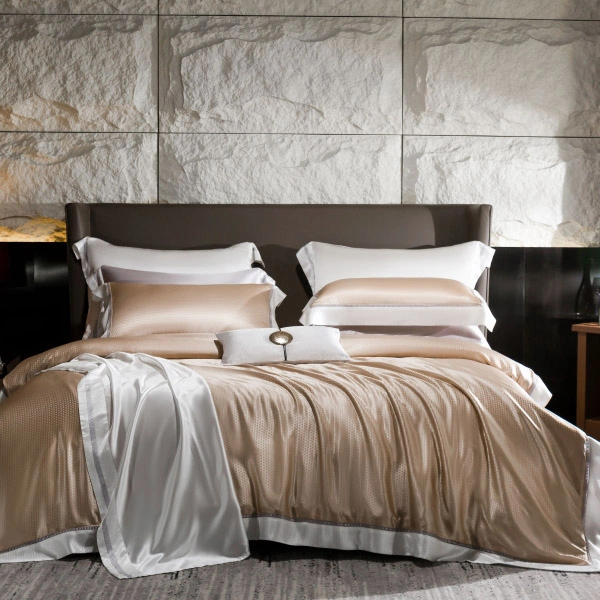
As a professional home textile manufacturer, we have duvet cover and quilt sets Which made of various fabrics such as cotton, Tencel, Cool, linen, and microfiber. Free provision of pattern and style design

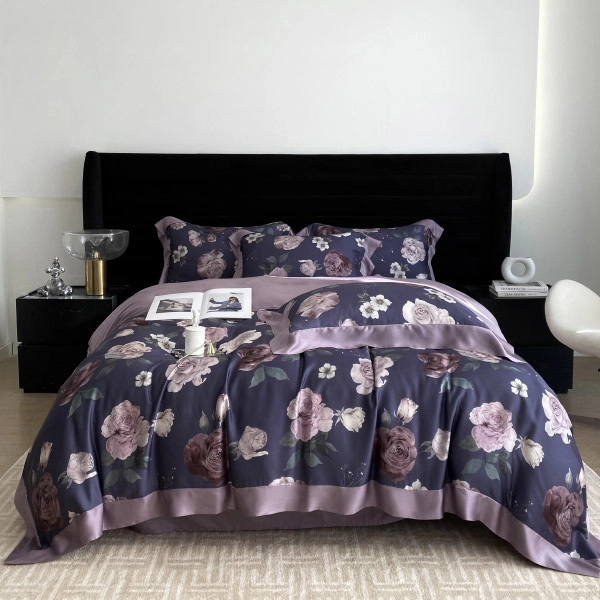
Flower printing tencel duvet cover set

Why Choose SNDON for Bed Sheet Set & Duvet Covers

More than ten years of home textile experience. Free design of patterns, styles, packaging, etc. Multiple serious certificates SGS, ISO, OEKO-TEX STANDARD 100 and other certificates. Low minimum order quantity.

Bed Sheet Set & Duvet Covers Advantages

1 Environmentally Friendly and Healthy
Environmentally Friendly and Healthy
Environmentally Friendly and Healthy

2 Strict Quality Control
Strict Quality Control

Strict Quality Control

3 Fast Sample
Fast Sample

Fast Sample

4 247 Customer Service
24/7 Customer Service
24/7 Customer Service

Products Categories
Get A Free Quote
Contact Form

Bedding Set Use for

Our Bedding set could use for Home ,school, hotel and as gift.

A Complete Collection of Basic Textile Knowledge: For Textile Newbies

  • Warp, warp yarn, and warp density—the lengthwise direction of the fabric; the yarns in this direction are called warp yarns; the number of yarns arranged per inch is the warp density (warp density);
  • Weft, weft yarn, and weft density—the widthwise direction of the fabric; the yarns in this direction are called weft yarns; the number of yarns arranged per inch is the weft density (weft density);
  • Density—a measure of the number of yarns per unit length of a woven fabric, generally expressed as the number of yarns per inch or 10 centimeters. While my country’s national standards specify the number of yarns per 10 centimeters, textile companies still prefer to use the number of yarns per inch. For example, the commonly seen “45×45/108×58” indicates a warp count of 45 and a weft count of 108 and 58, respectively, for a warp and weft density of 58.
  • Width – the effective width of the fabric, usually expressed in inches or centimeters. Common ones are 36 inches, 44 inches, 56-60 inches, etc., respectively called narrow width, medium width and wide width. Fabrics above 60 inches are extra wide, usually called wide cloth. Today, the width of extra wide fabrics in my country can reach 360 cm. The width is usually indicated after the density. For example, if the fabric mentioned in 3 is expressed with the width, it would be expressed as “45 x 45/108 x 58/60” (meaning the width is 60 inches).
  • Grammage – The grammage of a fabric is generally expressed in grams per square meter. Grammage is an important technical indicator for knitted fabrics, and woolen fabrics also often use grammage as an important technical indicator. The grammage of denim is usually expressed in “ounces (OZ)”, which is the number of ounces per square yard, such as 7-ounce and 12-ounce denim.
  • Yarn-dyed – This is called “pre-dyed fabric” in Japan. It refers to a process in which yarn or filament is first dyed and then woven using the dyed yarn. This type of fabric is called “dyed fabric”. Factories that produce yarn-dyed fabric are generally called dyeing and weaving factories. For example, denim and most shirt fabrics are yarn-dyed fabrics.
Scroll to Top

Get A Free Quote Now !

Contact Form
If you have any questions, please do not hesitate to contact us.
snodn Home textile factory